
Aarav - Logo
  • Home
  • About Us
  • Services
    • Physiotherapy
    • Child Development Care
  • Contact
  • blogs

For Consultation

+91-6302882910

blogs

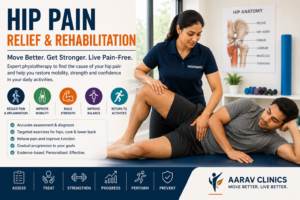
Hip pain physiotherapy with guided rehabilitation exercises

Hip Pain Physiotherapy: How to Reduce Hip Pain and Which Exercises to Avoid

August 31, 2026 No Comments

Hip pain can come from the joint itself, the surrounding tendons and muscles, the lower back, or some mix of all three. If you’re searching
Read More »
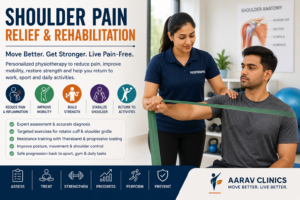
Shoulder pain physiotherapy with guided resistance band exercises

Shoulder Pain Physiotherapy: Exercises for Impingement, Strength and Mobility

August 31, 2026 No Comments

Shoulder pain has a way of touching everything — reaching overhead, getting dressed, sleeping, lifting, gym sessions. Exercise is usually part of the fix, but
Read More »
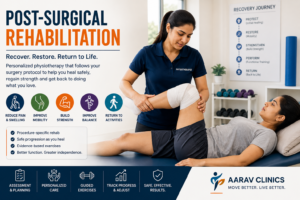
Post-surgical rehabilitation physiotherapy with a therapist guiding a patient through knee exercises

Post-Surgical Rehabilitation: What Physiotherapy Does After Knee and Other Surgeries

August 31, 2026 No Comments

Post-surgical rehabilitation is the structured process of getting movement, strength, and function back after an operation. Exactly what that looks like depends on the surgery,
Read More »
Physiotherapy for knee pain, osteoarthritis and ligament injuries

Knee Osteoarthritis, Ligament Injury and Effusion: When Physiotherapy Can Help

August 31, 2026 No Comments

Knee pain isn’t one single diagnosis — osteoarthritis, ligament injuries, and effusion can all cause pain or swelling, but each needs a different assessment and
Read More »
Knee exercises for pain relief with guided physiotherapy rehabilitation

Knee Pain Physiotherapy: Exercises for Weak Knees, Swelling and Rehabilitation

August 31, 2026 No Comments

Knee pain has a way of making the simplest things — climbing stairs, standing up from a chair, just walking — feel unexpectedly hard. Knee
Read More »
Physiotherapy for sciatica with guided exercises for leg pain

Sciatica and Leg Pain: Physiotherapy Exercises, Nerve Symptoms and Recovery

August 31, 2026 No Comments

“Sciatica” is the word people use for pain that travels from the lower back or buttock down into the leg because a nerve is irritated
Read More »
Physiotherapy for back pain with guided rehabilitation exercises

— Is Physiotherapy Good for Back Pain? A Guide to Lower Back Exercises, Spondylitis and Disc Problems

August 31, 2026 No Comments

Primary keyword is physiotherapy good for back pain Secondary keywords exercises for lower back pain, upper back stretches, spinal extension exercises, spondylitis treatment exercises, back
Read More »
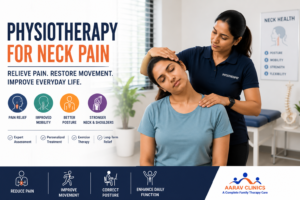
Physiotherapy for neck pain and cervical spondylosis with guided neck exercises

Physiotherapy for Neck Pain and Cervical Spondylosis: Exercises, Posture and Recovery

August 31, 2026 No Comments

Neck pain shows up for a lot of reasons — hours in front of a screen, a sudden strain, stiffness that builds up over time,
Read More »
Neurological physiotherapy deals with movement problems that come from the brain, spinal cord, or nerves rather than a joint or muscle injury. After a stroke, that can mean weakness down one side, shaky balance, stiffness, changed sensation, trouble walking, or just a loss of confidence in doing everyday things. The goal of a structured rehab plan is to build back safe movement and independence — starting from wherever the person actually is right now, not where they used to be. What does neurological physiotherapy after stroke actually look like? The nervous system and muscles need repeated, purposeful practice after a stroke — there's no shortcut. Sessions might involve bed mobility, sitting balance, standing, transfers, walking practice, upper-limb activity, strengthening, endurance work, and strategies to cut down fall risk. What exactly gets prioritized depends on which functions were affected and how medically stable the person is. What physiotherapy management of stroke typically includes It usually starts with checking strength, muscle tone, joint movement, balance, coordination, walking, and how daily tasks are going. The therapist also looks at how much help someone needs to roll over in bed, stand up from a chair, walk indoors, or climb steps. From there, goals get built around the activities that actually matter to the patient and their family — not generic milestones. Mobility and transfers Early on, a lot of the work is about safe movement — bed to chair, chair to toilet, sitting and standing with control. Getting these right early can cut down how much assistance someone needs and lets them take a more active role in their own care. Walking and balance Walking after a stroke can be thrown off by weakness, poor foot clearance, shaky balance, or simple lack of confidence. Practice often includes weight shifting, step training, walking with the right support, and balance challenges that build up gradually. Assistive devices come in wherever they genuinely improve safety. Strength and stamina Weakness after stroke affects both day-to-day function and overall activity levels. Carefully progressed strength and endurance work — when medically appropriate — isn't just about making a muscle stronger in isolation; it's about making standing, reaching, and walking easier in real life. Hemiparesis treatment in physiotherapy Hemiparesis means weakness on one side of the body. Treatment usually combines positioning, repeated movement practice, strengthening, balance work, and functional tasks — all adjusted to what the person can actually manage safely, rather than pushing movements that are unsafe or exhausting. Physiotherapy treatment for hemiplegia Hemiplegia is more severe — weakness or paralysis affecting one whole side. Treatment here needs real attention to shoulder protection, positioning, safe transfers, joint mobility, and avoiding secondary complications. Family members and caregivers are often taught safe handling techniques too, so that help at home supports the rehab rather than working against it. Stroke patient care outside the clinic Recovery goes a lot better when what happens at home matches what's being worked on in therapy — safe sitting positions, scheduled walking or standing practice, using the mobility aids that were actually prescribed, and letting the patient take part in daily tasks rather than doing everything for them. Caregivers should never pull on a weak arm, and should stick to the handling guidance the rehab team gives. Is recovery still possible two years after a stroke? Yes, for many people. Recovery speed slows down compared to the early months, but targeted practice on strength, balance, endurance, walking, and independence can still make a real difference years later. What matters is setting realistic, measurable goals based on where someone actually stands neurologically today. When to get urgent medical help A sudden new facial droop, new weakness, trouble speaking, severe dizziness, a sudden severe headache, or loss of consciousness is an emergency — not something to work through with exercises. Get emergency care immediately. Neurological rehabilitation at Aarav Clinics A good rehab program connects what happens in the clinic to what actually needs to happen at home and in daily life. At Aarav Clinics, that means building the plan around mobility, balance, strength, caregiver support, and what the patient is actually working toward — and reassessing regularly as things change. Frequently Asked Questions How soon should neurological physiotherapy start after a stroke? It depends on medical stability and what the treating medical team advises — rehab is often introduced as early as it's safely possible. Can a stroke patient exercise every day? Many people benefit from regular activity, but the type, intensity, and duration should be matched to their specific medical condition and rehab plan. Is recovery the same for every stroke patient? No — it varies a lot based on the location and severity of the stroke, age, other health conditions, complications, motivation, support, and how actively someone participates in rehab. Suggested internal links ● Relevant Physiotherapy service page ● Book Appointment / Contact page ● One related condition blog from this 10-blog cluster Medical content note This article is for general education and isn’t a diagnosis or a substitute for individual medical advice. Exercise choices should be adapted to the person’s condition, symptoms, medical history, and stage of recovery.

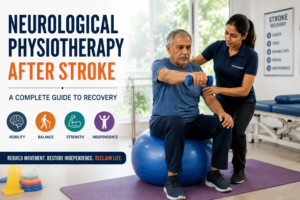
— Neurological Physiotherapy After Stroke: Rehabilitation, Hemiplegia and Long-Term Recovery

August 31, 2026 No Comments

Neurological physiotherapy deals with movement problems that come from the brain, spinal cord, or nerves rather than a joint or muscle injury. After a stroke,
Read More »
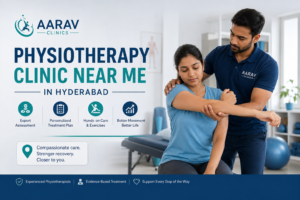
Physiotherapist helping a patient with shoulder rehabilitation at Aarav Clinics in Hyderabad

How to Choose the Best Physiotherapy Clinic Near You in Hyderabad

August 31, 2026 No Comments

Primary keyword physiotherapy clinic near me Secondary keywords best physiotherapy clinic near me, physiotherapy center near me, physiotherapy nearby, physiotherapy near me open now, physiotherapy
Read More »

Professional healthcare clinic that specializes in Physiotherapy & Child Development Care

Instagram Youtube Jki-facebook-light Linkedin-in

Our Clinic

  • 2nd floor, Sai Sadan Enclave, Ashok Nagar, Hyderabad, Telangana 502032
  • aaravphysioclinics@gmail.com
  • +916302882910
  • Everyday 09 am - 07 pm

Quick Links

  • About
  • Services
  • Blogs
  • Contact

Subscribe Our Newsletter

Aarav Clinics

Copyright © 2025 All rights reserved.